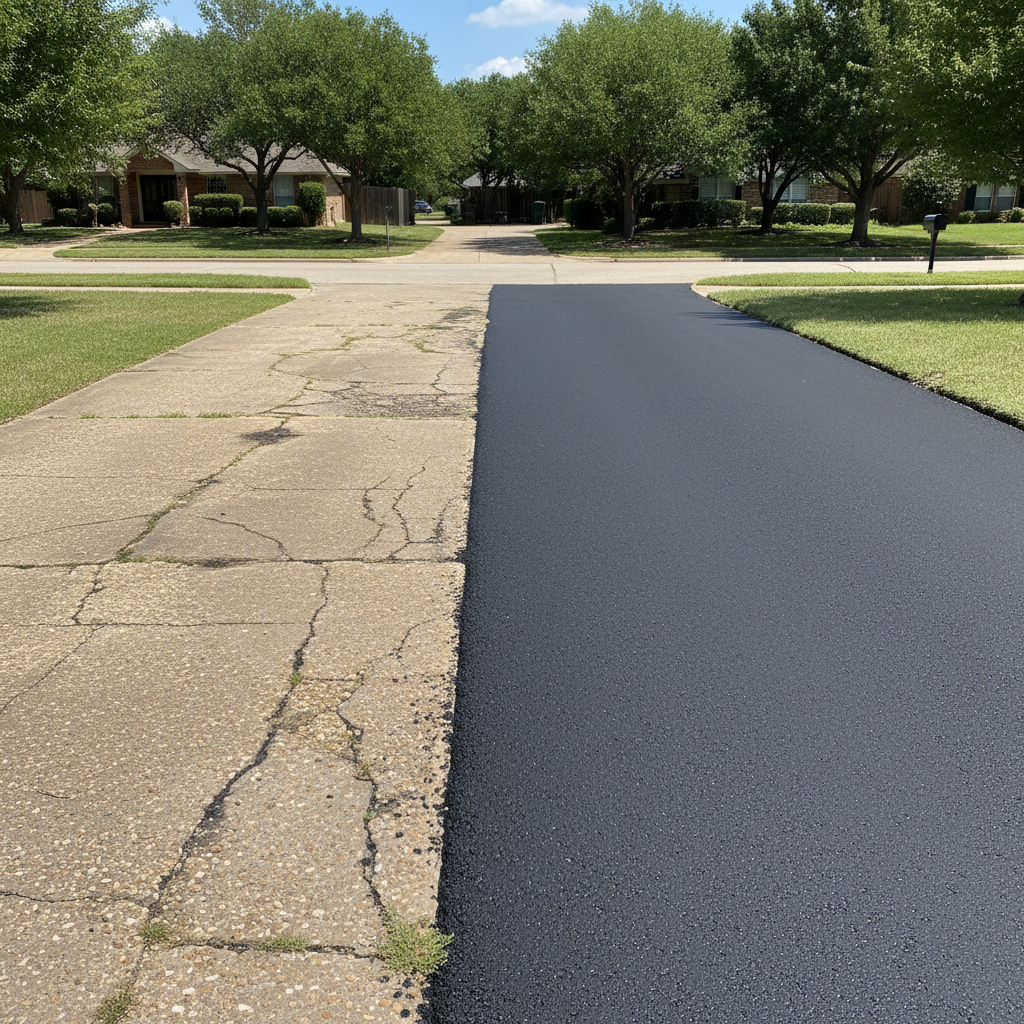
Alright, let's talk about your commercial parking lot here in Dallas. When that asphalt starts looking rough, you've actually got a couple of big options: an overlay or a full depth replacement. People often ask me, "Which one's better?" Honestly, it really just depends on what you're dealing with and what you need that lot to do for the next decade or so.
What's an Asphalt Overlay?
Think of an overlay like giving your existing pavement a really thick, durable new skin. We're not tearing out the whole thing, you see. Instead, we'll prep the old surface first – that means fixing any major potholes, sealing cracks, and making sure it's stable. Then, we lay down a fresh layer of hot asphalt right on top, usually about 1.5 to 2 inches thick. It's a popular choice, and for good reason.
What's Full Depth Paving?
This? This is the whole enchilada. We're ripping out everything, right down to the dirt. After that, we compact the subgrade (that's the soil underneath, by the way), lay down a new base layer – usually crushed rock – and then put down multiple layers of fresh asphalt. It's basically building a brand new parking lot from scratch.
Cost: Where Your Wallet Comes In
No surprises here: an overlay is almost always going to be cheaper upfront. You're using the existing structure, which means less demolition, less material to haul away, and often less new material to bring in. That's a significant saving, sometimes 30-50% less than a full replacement. For a lot that's got some wear but no major structural issues, it's a smart way to get a great looking surface without totally breaking the bank.
Full depth paving? That's a bigger investment, sure. You're paying for all that demolition, the hauling, new base material, and more asphalt. But you're also getting a brand new foundation, and for some situations, that's absolutely worth it.
Durability: How Long Will It Last?
This is where the "it depends" really kicks in, doesn't it? A good asphalt overlay, done right on a solid existing base, can give you another 10 to 15 years of good service. Maybe even more if you keep up with the sealcoating and minor repairs. The key, though, is that existing base. If it's already got widespread, deep cracks (what we call alligator cracking), or if you've got areas that are constantly sinking or heaving, an overlay is just putting a band-aid on a broken leg. Those underlying problems will eventually telegraph right through the new surface.
Full depth paving, on the other hand, is built to last. When you've got a brand new, properly compacted base and fresh asphalt layers, you're looking at 20 to 30 years, sometimes even longer, with proper maintenance. You're essentially resetting the clock entirely.
Maintenance: Keeping It Looking Good
Both options need maintenance; that's just a fact of life with asphalt, especially with our crazy Dallas weather. Those hot summers and sudden freezes really do a number on pavement. For an overlay, you'll still want to sealcoat every few years and address any cracks as they pop up. The same goes for full depth paving, but you'll likely find yourself doing less major crack filling in the early years because, well, it's new.
The big difference comes if things go wrong. If an overlay starts failing because the original base was bad, you're often looking at a full replacement anyway. If a full depth lot has an issue, it's usually localized and easier to repair without affecting the whole structure.
Appearance: First Impressions Matter
Both options, when done by a pro like Absolute Asphalt Paving, will look fantastic right after they're finished. A smooth, black, fresh asphalt surface always looks sharp. Overlays can sometimes show minor imperfections from the old surface if it wasn't prepped perfectly, but a skilled crew minimizes that. Full depth, though, is a perfectly uniform canvas from day one.
My Recommendation for Dallas Commercial Properties
Here's the deal: if your existing commercial parking lot has some surface cracks, fading, and maybe a few potholes, but the underlying structure feels solid – no big dips, no widespread alligator cracking, no drainage issues causing constant puddles – then an asphalt overlay is probably your best bet. It's cost-effective, gives you a great new look, and will last a good long time. This is especially true for lots in areas like North Dallas or Plano where the soil tends to be a bit more stable.
However, if your lot looks like a jigsaw puzzle, with deep, interconnected cracks everywhere, constant standing water, or sections that have clearly sunk or heaved (which we see a lot with our expansive clay soils around here, especially in older developments), then you need full depth paving. Seriously, don't waste your money on an overlay; those underlying problems will just reappear, and you'll end up paying twice. It's a bigger investment, but it's the only way to truly fix those structural issues and ensure your lot serves your business well for decades to come.
Give us a call at Absolute Asphalt Paving. We'll come out, take a look at your lot, and give you an honest assessment of what we think is the right approach for your specific situation. No pressure, just good advice from folks who know Dallas asphalt.